
Cloud
Breaking Down The Barriers To OpenStack Adoption
The people behind the OpenStack cloud controller do not spend a lot of time worrying about the competition, whoever or whatever that might be. …

The people behind the OpenStack cloud controller do not spend a lot of time worrying about the competition, whoever or whatever that might be. …
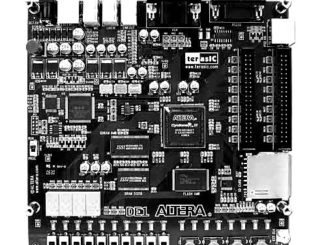
The accelerator story for top supercomputers is a strong one, starting with GPUs, which were snapped in as coprocessors on some of the world’s largest systems over the last five years. …
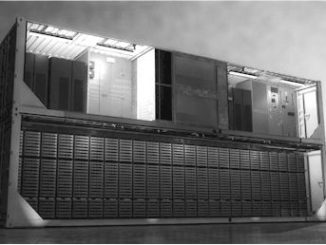
It has been a year and a half since IT supplier Dell went private, and the company is reveling in the fact that competitors can no longer peer into its financials to look for weaknesses and that it can make decisions privately and for the long-term rather than make them publicly and largely on the much shorter-term that all public companies have to align to. …

With the oil and gas industry continuing to spend on massive supercomputers, even in the wake of declining revenues, and no sign of the HPC business slowing for the oil and gas segment, one has to wonder what alternatives on the hardware and software front these companies might look to as costs (for both systems and the power required to support them) drives skywards. …
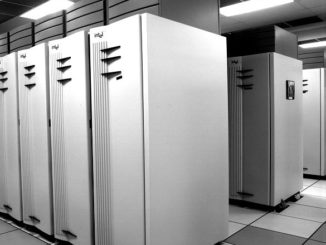
There is some speculation afoot that Intel is on a path to rekindle its supercomputer business, bringing it full circle to where it started in the late 1980s and early 1990s with its own distinct high performance computing division that produced top-tier national lab systems like ASCI Red, among others. …

The broader adoption of GPU acceleration for workloads in the traditional high performance computing segment and expansion in new areas such as deep learning are driving revenues and profits at graphics chip maker Nvidia. …
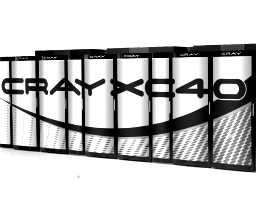
Low margins, an unpredictable cycle, expensive and ongoing research development efforts, a slavish commitment to processor upgrade timelines, and a market that will only ever grow so much—who wouldn’t want to be in the supercomputing systems business? …

For those who want to run high performance computing applications in the public cloud, there are limited options, but not for the reasons one might expect. …
Companies in the IT sector have a kind of inertia that is directly related to their revenue and profit streams, which are a measure of their influence in the IT supply chain and among customers. …
Hewlett-Packard may not have created a business line dedicated to custom server manufacturing like rival Dell. …
All Content Copyright The Next Platform