AI
Pushing Database Scalability Up And Out With GPUs
What is good for the simulation and the machine learning is, as it turns out, also good for the database. …

What is good for the simulation and the machine learning is, as it turns out, also good for the database. …
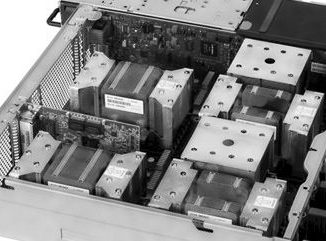
The very first systems that allow for GPUs to be hooked directly to CPUs using Nvidia’s NVLink high-speed interconnect are coming to market now that Big Blue is updating its Power Systems LC line of Linux-based systems with the help of hardware partners in the OpenPower Foundation collective. …

Intel has planted some solid stakes in the ground for the future of deep learning over the last month with its acquisition of deep learning chip startup, Nervana Systems, and most recently, mobile and embedded machine learning company, Movidius. …

It is a coincidence, but one laden with meaning, that Nvidia is setting new highs selling graphics processors at the same time that SGI, one of the early innovators in the fields of graphics and supercomputing, is being acquired by Hewlett Packard Enterprise. …

Update – 8/9/16 1:00 p.m. Pacific – Not even 24 hours after this story was posted Intel bought Nervana Systems. …

As we have written about extensively here at The Next Platform, there is no shortage of use cases in deep learning and machine learning where HPC hardware and software approaches have bled over to power next generation applications in image, speech, video, and other classification and learning tasks. …

Intel has finally opened the first public discussions of its investment in the future of machine learning and deep learning and while some might argue it is a bit late in the game with its rivals dominating the training market for such workloads, the company had to wait for the official rollout of Knights Landing and extensions to the scalable system framework to make it official—and meaty enough to capture real share from the few players doing deep learning at scale. …
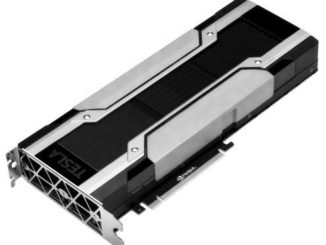
Nvidia wants for its latest “Pascal” GP100 generation of GPUs to be broadly adopted in the market, not just used in capability-class supercomputers that push the limits of performance for traditional HPC workloads as well as for emerging machine learning systems. …
AMD gets a lot of credit for creating Accelerated Processing Units that merge CPUs and GPUs on a single package or on a single die, but Intel also has a line of chips Core and Xeon processors that do the same thing for workstation and server workloads. …
Having made the improbable jump from the game console to the supercomputer, GPUs are now invading the datacenter. …
All Content Copyright The Next Platform