IBM Extends GPU Cloud Capabilities, Targets Machine Learning
As we have noted over the last year in particular, GPUs are set for another tsunami of use cases for server workloads in high performance computing and most recently, machine learning. …
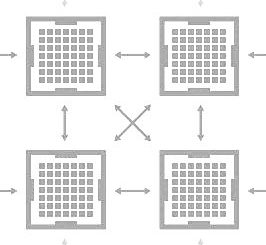
One of the breakthrough moments in computing, which was compelled by necessity, was the advent of symmetric multiprocessor, or SMP, clustering to make two or more processors look and act, as far as the operating system and applications were concerned, as a single, more capacious processor. …
This month Nvidia bolstered its GPU strategy to stretch further into deep learning, high performance computing, and other markets, and while there are new options to consider, particularly for the machine learning set, it is useful to understand what these new arrays of chips and capabilities mean for users at scale. …
Pattern analytics, deep learning, and machine learning have fueled a rapid rise in interest in GPU computing, in addition to GPU computing applications in high performance computing (HPC) and cloud-based data analytics. …
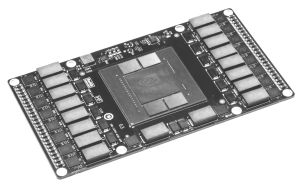
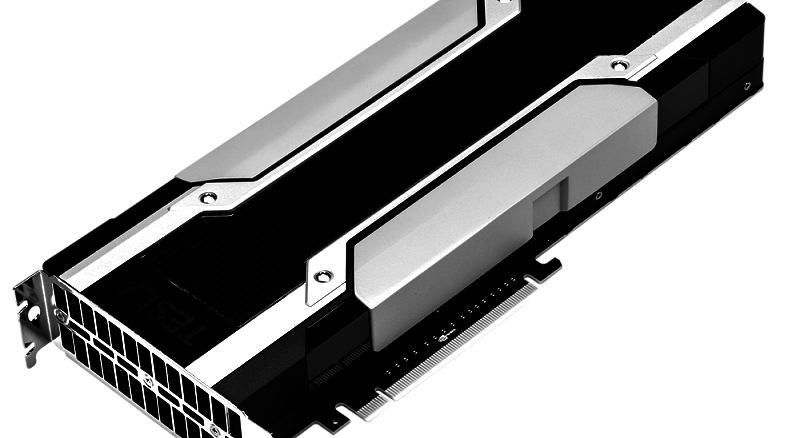
Nvidia made a lot of big bets to bring its “Pascal” GP100 GPU to market and its first implementation of the GPU is aimed at its Tesla P100 accelerator for radically improving the performance of massively parallel workloads like scientific simulations and machine learning algorithms. …
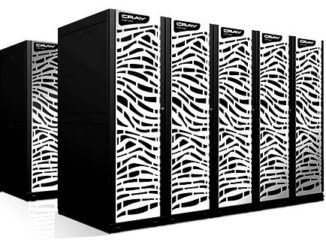
Supercomputer maker Cray might not roll out machines for deep learning anytime in 2016, but like other system vendors with deep roots in high performance computing, which leverages many of the same hardware elements (strong interconnect and GPU acceleration, among others), they are seeing how to loop their expertise into a future where machine learning rules. …
Deep learning could not have developed at the rapid pace it has over the last few years without companion work that has happened on the hardware side in high performance computing. …
Switch chips have a very long technical and economic lives, considerably longer than that of a Xeon processor used in a server – something on the order of seven or eight years compared to three or four. …
As a former research scientist at Google, Ian Goodfellow has had a direct hand in some of the more complex, promising frameworks set to power the future of deep learning in coming years. …
The revolution in GPU computing started with games, and spread to the HPC centers of the world eight years ago with the first “Fermi” Tesla accelerators from Nvidia. …
All Content Copyright The Next Platform