
Cloud
Bridging The Gap Between Grid And Containers
At the moment, there are two types of software container users, but in the long run, there will probably only be one. …

At the moment, there are two types of software container users, but in the long run, there will probably only be one. …

For someone like Steve Pawlowski, who spent well over thirty years at Intel working on a wide range of processors for an even more striking array of platforms, it seems only natural to take a cautious view of entirely new approaches to data processing that require a fundamental rethink of computing hardware and software. …
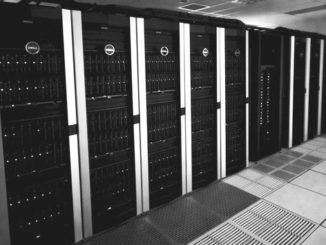
By definition, the national HPC labs are on the very bleeding edge of supercomputing technology, which is necessary given the scope and scale of the problems they are trying to solve through simulation and analysis and enabled by the largesse of their budgets. …
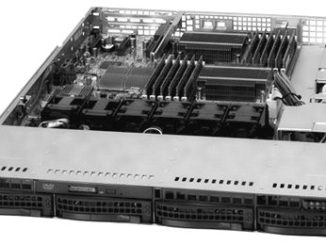
You have no doubt heard the one about making it up in volume, a jokey phrase that people use when a business has to crank out more and more widgets to stay in the same place. …
As the theme goes this year, what’s old is new again. …

Without any new plain vanilla processors from Intel, IBM, Fujitsu, AMD, or the relative handful of ARM server chip makers, and with Nvidia launching its Tesla M4 and M40 accelerators aimed at hyperscalers and those looking for cheap single-precision flops ahead of SC15, the “Knights Landing” Xeon Phi chip was pretty much the star of the high performance conference as far as compute is concerned. …

The choice of programming tools and programming models is a deeply personal thing to a lot of the techies in the high performance computing space, much as it can be in other areas of the IT sector. …
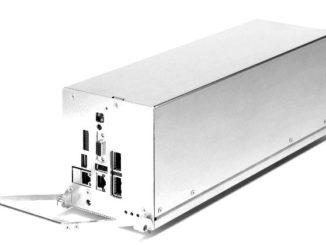
Every supercomputing center in the world is wrestling with the issues of power, cooling, and compute density, but some have tighter constraints than others and need to have more energy efficient machines than they can get with standard clusters of rack servers. …
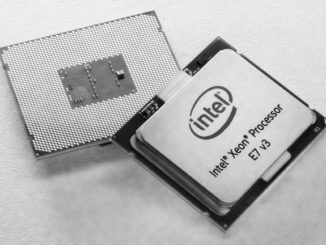
Moore’s Law might be winding down in observable ways, but that realization will not keep Intel from putting its maintenance on the front burner. …

Whether it is IBM with the data-centric approach to next generation supercomputers or Intel with its scalable systems framework, there is little doubt that these and other major players in HPC are thinking differently about how to architect and benchmark systems in a way that balances floating point performance with the other equally important leg of the stool—data movement. …
All Content Copyright The Next Platform