Compute
Stretching Software Across Future Exascale Systems
If money was no object, then arguably the major nations of the world that always invest heavily in supercomputing would have already put an exascale class system into the field. …

If money was no object, then arguably the major nations of the world that always invest heavily in supercomputing would have already put an exascale class system into the field. …

The supercomputing industry is as insatiable as it is dreamy. We have not even reached our ambitions of hitting the exascale level of performance in a single system by the end of this decade, and we are stretching our vision out to the far future and wondering how the capacity of our largest machines will scale by many orders of magnitude more. …

As supercomputers expand in terms of processing, storage, and network capabilities, the size and scope of simulations is also expanding outward. …
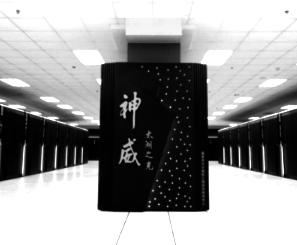
As the world is now aware, China is now home to the world’s most powerful supercomputer, toppling the previous reigning system, Tianhe-2, which is also located in the country. …

System software setup and maintenance has become a major efficiency drag on HPC labs and OEMs alike, but community and industry efforts are now underway to reduce the huge amounts of duplicated development, validation and maintenance work across the HPC ecosystem. …
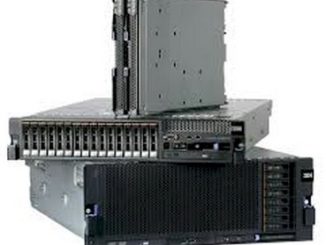
When IBM sold off its System x division to Lenovo Group in the fall of 2014, some big supercomputing centers in the United States and Europe that were long-time customers of Big Blue had to stop and think about what their future systems would look like and who would supply them. …

Weather modeling and forecasting centers are among some of the top users of supercomputing systems and are at the top of the list when it comes to areas that could benefit from exascale-class compute power. …

Since the 1990s, MPI (Message Passing Interface) has been the dominant communications protocol for high-performance scientific and commercial distributed computing. …
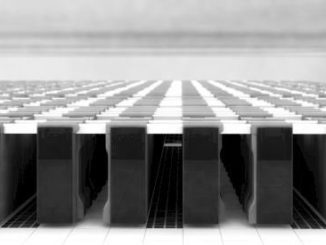
The rumors that supercomputer maker Fujitsu would be dropping the Sparc architecture and moving to ARM cores for its next generation of supercomputers have been going around since last fall, and at the International Supercomputing Conference in Frankfurt, Germany this week, officials at the server maker and RIKEN, the research and development arm of the Japanese Ministry of Education, Culture, Sports, Science and Technology (MEXT) that currently houses the mighty K supercomputer, confirmed that this is indeed true. …
As we have written about extensively here at The Next Platform, there is no shortage of use cases in deep learning and machine learning where HPC hardware and software approaches have bled over to power next generation applications in image, speech, video, and other classification and learning tasks. …
All Content Copyright The Next Platform