Compute
Drilling Down Into The Machine From HPE
It has been roughly a year and a half since Hewlett Packard Enterprise first announced its intent to create a completely different kind of a system. …

It has been roughly a year and a half since Hewlett Packard Enterprise first announced its intent to create a completely different kind of a system. …
While many consumers in the U.S. might not have heard much about Baidu, when it comes to engineers and computer scientists, the Chinese company is on par with Google, Facebook, and their ilk when it comes to massively scaled distributed computing. …
The datacenter is a tough battleground, with vendors at every part of the stack pushing and pulling against each other to try to win business. …
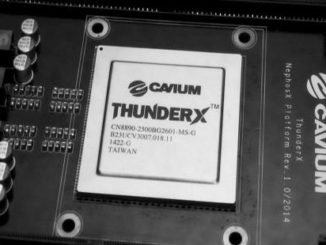
If it was as easy as global replacing a bunch of MIPS cores with a bunch of ARM cores, then network chip makers Cavium and Broadcom would already have long since put their respective “ThunderX” and “Vulcan” 64-bit ARM server processors into the market. …

Stanford University PhD candidate, Song Han, who works under advisor and networking pioneer, Dr. …
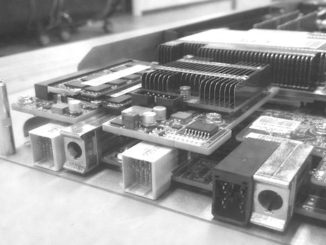
FPGAs might be the next big thing for a growing host of workloads in high performance and enterprise computing, but for smaller companies, not to mention research institutions, the process of onboarding is not simple—or inexpensive. …

For Google, Baidu, and a handful of other hyperscale companies that have been working with deep neural networks and advanced applications for machine learning well ahead of the rest of the world, building clusters for both the training and inference portions of such workloads is kept, for the most part, a well-guarded secret. …

For someone like Steve Pawlowski, who spent well over thirty years at Intel working on a wide range of processors for an even more striking array of platforms, it seems only natural to take a cautious view of entirely new approaches to data processing that require a fundamental rethink of computing hardware and software. …
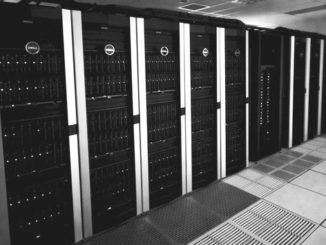
By definition, the national HPC labs are on the very bleeding edge of supercomputing technology, which is necessary given the scope and scale of the problems they are trying to solve through simulation and analysis and enabled by the largesse of their budgets. …
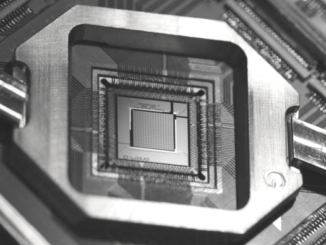
If not for the fact that there are several installed, functional quantum computers on the planet chewing away on tough problems—including the burdensome issue of their own operation—one might suspect that these systems were still more science fiction than reality. …
All Content Copyright The Next Platform