AI

Graphcore Thinks It Can Get An AI Piece Of The HPC Exascale Pie

For the last few years, Graphcore has primarily been focused on slinging its IPU chips for training and inference systems of varying sizes, but that is changing now as the six-year-old British chip designer is joining the conversation about the convergence of AI and high-performance computing.

AI

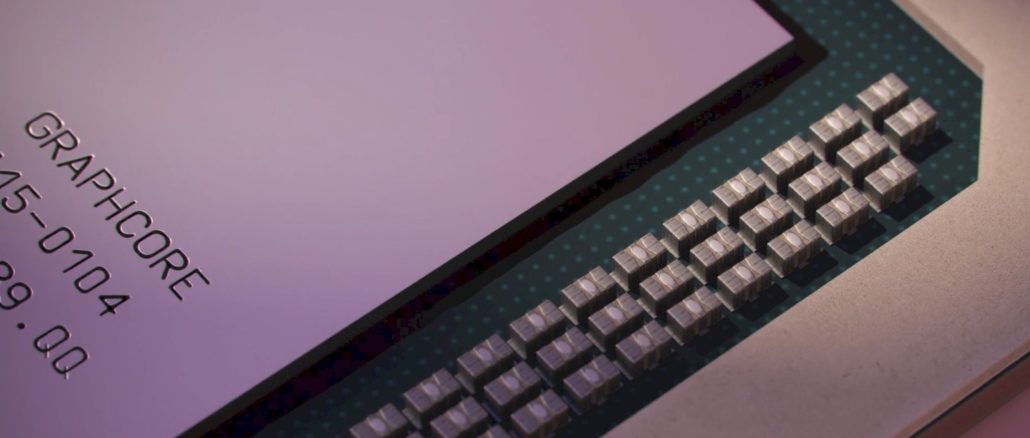
Graphcore Goes Full 3D With AI Chips

The 3D stacking of chips has been the subject of much speculation and innovation in the past decade, and we will be the first to admit that we have been mostly thinking about this as a way to cram more capacity into a given compute engine while at the same time getting components closer together along the Z axis and not just working in 2D anymore down on the X and Y axes.

AI

Graphcore Shows GAN Gains for CERN

While securing the high-end particle physics market segment is not likely to push any of the AI/ML ASICS into competition with GPUs anytime soon, the chipmakers that can prove their value on some of the most demanding, real-time AI workloads can capture some serious mindshare.

No Picture

TR‌ANSFOR‌‍M YO‌‍U‌R‍ D‌A‍TA‌ C‍ENTR‌‍E WITH THE‌ GRAPHCORE IP‍U‌-P‍O‌D SC‍ALE-O‌UT TEC‌‍HNO‍LO‍G‌Y

Sponsored by Graphcore

  • IP‍U‌-P‍O‌D‍ 64 SC‌A‌LE-O‍UT SYSTEM WEBINAR‌

27th January 2021 – 16:00 GMT, 8:00 PT, 11:00 ET

IPU-POD is Graphcore’s unique scale-out solution for high-performance machine intelligence compute, ideal for experimentation to prototype to production systems from IPU-M2000 with 4 IPUs up to supercomputing scale.

AI

An Early Look at Startup Graphcore’s Deep Learning Chip

As a thought exercise, let’s consider neural networks as massive graphs and begin considering the CPU as a passive slave to some higher order processor—one that can sling itself across multiple points on an ever-expanding network of connections feeding into itself, training, inferencing, and splitting off into multiple models on the same architecture.