
AI
AI Infrastructure Needs Systems Level Thinkers
If we are talking about infrastructure it might seem obvious to take a systems-level view. …

If we are talking about infrastructure it might seem obvious to take a systems-level view. …

When it comes to making swift pivots to keep pace with the newest architectural innovations, organizations like weather and climate prediction-focused NOAA have major constraints. …

A group of researchers at Sandia National Laboratories have developed a tool that can cross-train standard convolutional neural networks (CNN) to a spiking neural model that can be used on neuromorphic processors. …
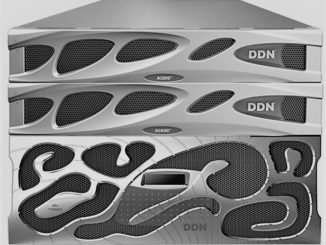
For the past decade, flash has been used as a kind of storage accelerator, sprinkled into systems here and crammed into bigger chunks there, often with hierarchical tiering software to make it all work as a go-between that sits between slower storage (or sometimes no other tier of storage) and either CPU DRAM or GPU HBM or GDDR memory. …
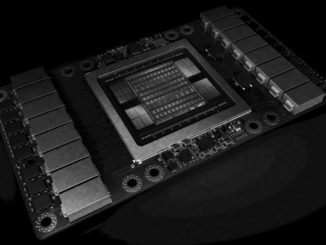
The diverse set of applications and algorithms that make up AI in its many guises has created a need for an equally diverse set of hardware to run it. …
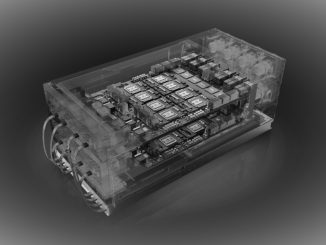
To a certain way of looking at it, Nvidia has always been engaged in the high performance computing business and it has always been subject to the same kinds of cyclical waves that affect makers of supercomputers and enterprise systems. …
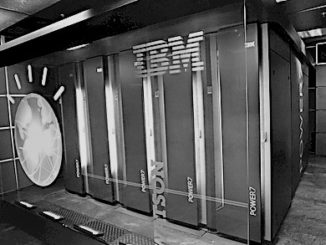
Earlier in this decade, when the hyperscalers and the academics that run with them were building machine learning frameworks to transpose all kinds of data from one format to another – speech to text, text to speech, image to text, video to text, and so on – they were doing so not just for scientific curiosity. …
History and economics – as if you could separate the two – are burgeoning with examples of products being developed for one task and then being used, perhaps after some tweaking, for an entirely new and usually unexpected task. …

TensorFlow, probably the most popular of the dozen or so deep learning frameworks, is typically used to develop neural networks on small or medium-sized clusters, and sometimes on just a single GPU-accelerated node. …

Generative adversarial neural networks are the next step in deep learning evolution and while they hold great promise across several application domains, there are major challenges in both hardware and frameworks. …
All Content Copyright The Next Platform