
Quantum computing is finally heating up. There is a heady mix of high-profile and highly resourced big tech players like Google, Microsoft, Amazon Web Services, and Nvidia either building QPUs, simulating them, or integrating them with classical supercomputers in addition to well-funded younger companies and startups, such as QuEra, IonQ, Quantum Computing, Quantinuum, D-Wave, and Alice & Bob.
Over the past year or so, many of these companies have made significant advancements in error correction, qubit count and decoherence, scale, and quantum advantage, that latter bit being the stage when a quantum computer can solve a problem that would be impossible for a classical computer to do or, more practically, one that would take the classical computer many years to complete and therefore makes the approach impractical.
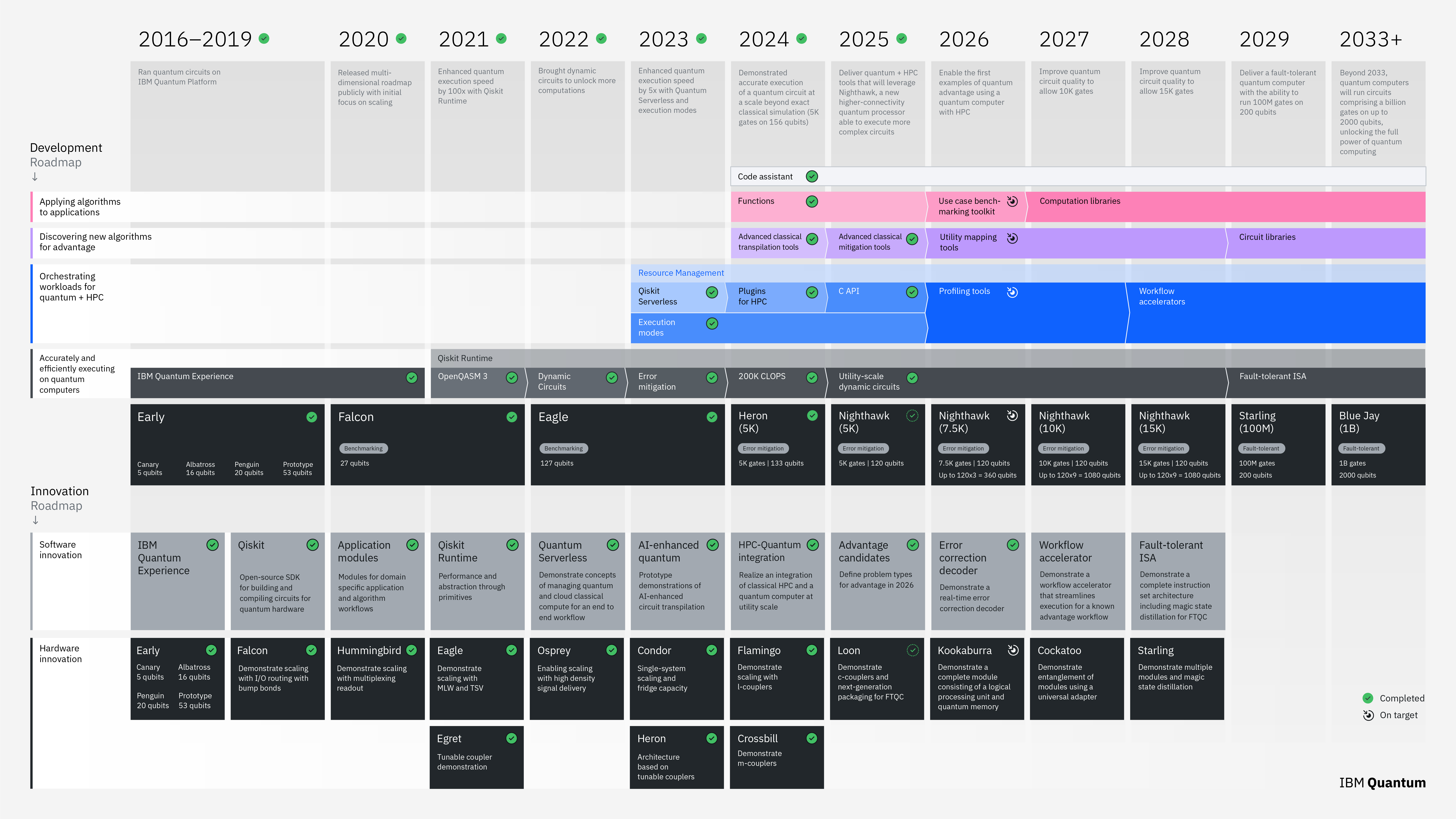
Standing squarely among all of these quantum companies is IBM, the venerable 114-year-old tech giant that has been working on the quantum computing challenge for decades and has made its share of headlines over the past twelve months. Significantly, Big Blue in June unveiled its roadmap (below) for pulling together the pieces that will lead to Quantum Starling, a large-scale, fault-tolerant quantum system that executives say will be built by 2028 and be available a year later through a quantum datacenter IBM is building in Poughkeepsie, New York.
The company since has taken other steps in the quantum computing arena, including collaborating with AMD to show that its quantum computing error correction algorithm can run on AMD chips, and working with quantum startup Pasqal to detail what’s needed to define quantum advantage and to “rigorously confirm” whether an advantage was achieved, with companies making the claim having to hypothesize and validate and those on the outside trying to support or disprove the claim.
This week at its second-annual Quantum Developer Conference 2025 in Atlanta, IBM is making good on promises laid out in its roadmap, unveiling its quantum Nighthawk processor (below) that will be delivered to users by the end of the year and play a central role – along with quantum software – to achieve quantum advantage by the close of 2026.

IBM also announced Quantum Loon, which IBM executives call an “experimental processor” that holds the critical processor components needed for fault-tolerant quantum computing, address a long-known challenge that comes with quantum computing.
In other announcements, IBM is pointing to new quantum software that executives say will provide a 24 percent increase in the accuracy of circuits at more than 100 qubits and lower the cost of getting accurate results by more than 100 times, accelerate by 10 times quantum error correction decoding over other approaches – something achieved a year ahead of schedule – and working with the likes of Algorithmiq, Flatiron Institute, and BlueQubit to contribute experimental results to a new open community system tracking quantum advantage claims. It’s part of the effort by IBM – which says, despite such claims already made, the first cases of verified quantum advantage will be confirmed in 2026 – to ensure such claims can be verified and validated.
Jay Gambetta, IBM fellow and director of IBM Research, said that “there are many pillars to bringing truly useful quantum computing to the world. IBM is the only company that is positioned to rapidly invent and scale quantum software, hardware, fabrication, and error correction to unlock transformative applications.”
Generations Of Nighthawks
The Nighthawk announced at the Atlanta event will include superconducting 120 qubits, linked via 218 tunable couplers, to their four nearest neighbors in a square lattice. It will have more than 20 percent more couplers than its predecessor, Quantum Heron. The increase connectivity will mean organizations will be able to execute circuits with 30 percent more complexity than Heron and still maintain low error rates.
A wafer containing the Nighthawk chips can be seen below:

It’s the first of four generations of Nighthawk that IBM will release over four years, with each generation delivering better quality and connectivity. The next Nighthawk iteration, due at the end of 2026, will provide up to 7,500 gates, with another delivering 10,000 gates the next year. By 2028, Nighthawk-based systems will include up to 15,000 two-qubit gates with more than 1,000 or more connected qubits that will be extended by long-range couplers that IBM first demonstrated last year.
IBM’s Loon processor (below) is a key step toward the scalable and fault-tolerant Starling quantum system, with executives saying it includes all the key components needed for such a fault-tolerant computer. It includes such features as multiple high-quality, low-loss routing layers for longer on-chip connection that push beyond nearest neighbor couplers to physically link distant qubits together on the same chip and methods for resetting qubits in between computations.

IBM’s work with AMD in showed how classical computers can accurately decode errors in real time using qLDPC (quantum low-density parity check), which the company described in a research report published in Nature early last year and is being delivered a year ahead of schedule.
IBM earlier this year said it had developed a belief propagation algorithm – Relay-BP – that used qLDPC to address quantum errors while running on a classical computer, which is a crucial point in IBM’s partnership with AMD. It can use classical computing hardware to decode errors in real time – fewer than 480 nanoseconds – via qLDPC codes.
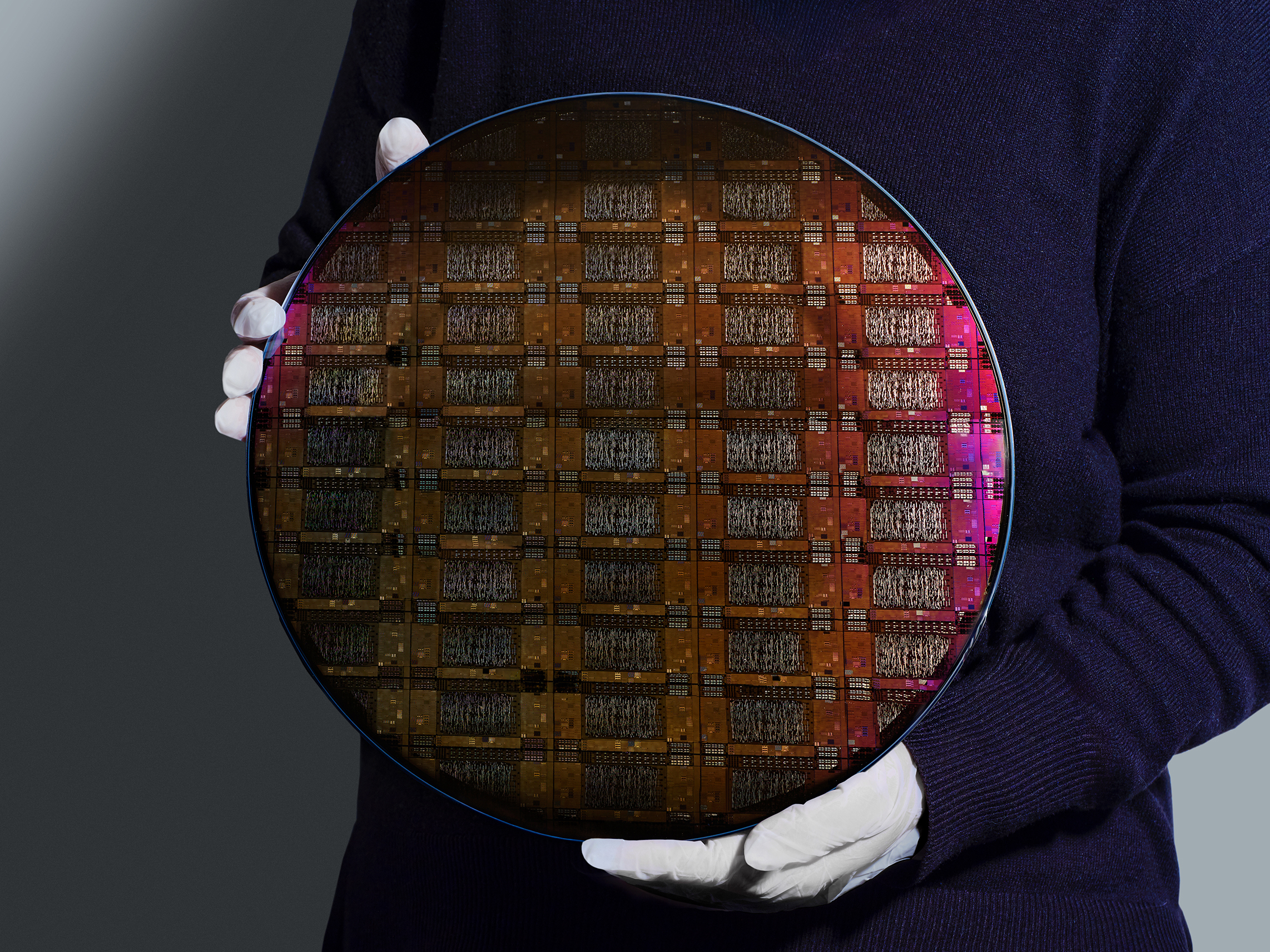
The processor wafers for IBM’s quantum chips will be made at the Albany NanoTech Complex advanced 300 mm wafer fabrication facility in New York, IBM announced this week. Through the facility, IBM already has already been able to improve the capabilities of its quantum processors and increase the connectivity, density, and performance of its qubits, which has helped double the speed of its R&D efforts by reducing the time needed to build its new processors by at least half. IBM also has hit a 10X increase it the complexity of the chips.
Focusing On Qiskit
In addition, IBM is making or planning improvements to Qiskit, an open source software development kit for quantum systems that IBM developed, including scaling dynamic circuit capabilities that provide the 24 percent increase in accuracy and introducing a new execution model for Qiskit the reduces the cost of getting accurate results by some of the system by more than 100 time.
IBM also is including a C++ interface to Qiskit so developers can program quantum natively in their HPC environments and by 2027 will bring computational libraries to such areas as machine learning and optimization.

Testing the Limits of a Quantum Hardware Market
D-Wave today announced another milestone in its quest to keep adding qubits, jumping from the previous generation 2000 qubit device to one with 5000. This is a notable achievement that doubtlessly will be written to death elsewhere from a quantum progress point of view but should probably be discussed from …

The Horizontal And Vertical Platforms Of Big Blue
At its heart, and until the day it dies, if a corporation ever really dies, International Business Machines will be a platform company, no matter how much it tries to bamboozle itself or Wall Street or Main Street otherwise. And sometimes, when we examine Big Blue’s quarterly financial results, it …

Injecting Machine Learning And Bayesian Optimization Into HPC
No matter what kind of traditional HPC simulation and modeling system you have, no matter what kind of fancy new machine learning AI system you have, IBM has an appliance that it wants to sell you to help make these systems work better – and work better together if you …