
Compute
AMD Cranks The Rome Clocks, Keeping The Heat On Intel
One size definitely does not fit all workloads and one budget when it comes to server processors. …

One size definitely does not fit all workloads and one budget when it comes to server processors. …

Companies invest in platforms over a decade or more, and that is why architectures persist longer than we might think given technological differences and economic forces. …

There is an equally virtuous and vicious cycle that propels all computing: Innovation requires competition to propel it, and competition requires innovation to meet it; repeat or fade. …
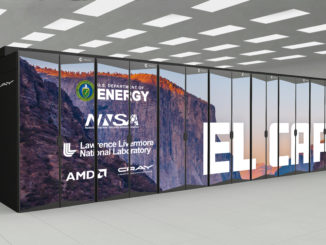
As the steward of the nuclear weapon arsenal for the United States government, it is probably not an overstatement to say that Lawrence Livermore National Laboratory, one of the main supercomputer and scientific research facilities operated by the Department of Energy, is keenly interested in bang for the buck. …

In the past year or so, watching supercomputer maker Cray, which is now part of Hewlett Packard Enterprise, has been a bit like playing a country and western song backwards on the record player. …
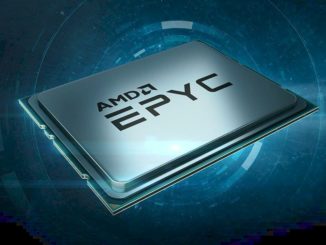
It is hard to take on either Intel or Nvidia in their respectively dominant CPU and GPU markets, and credit is due to AMD for taking on both companies at the same time to try to carve itself a larger slice of the datacenter pie. …
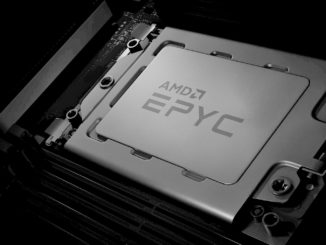
At some point, when the Epyc server CPU and Radeon Instinct GPU accelerator businesses are more substantial, AMD will probably be a lot less opaque about how its datacenter business is doing. …
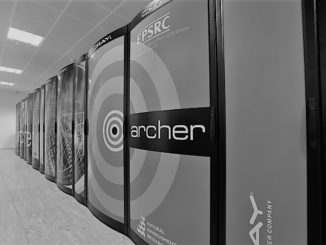
AMD has picked up yet another big supercomputer win with the selection of its second-generation Epyc processors, aka Rome, as the compute engine for the ARCHER2 system to be installed at the University of Edinburgh next year. …
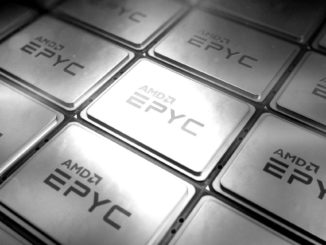
Good news is continuing to gather around AMD’s second-generation “Rome” Epyc processors. …
AMD is definitely on a roll in the United States for pre-exascale and future exascale systems, having won the deals at Lawrence Berkeley National Lab with the “Perlmutter” system, at Oak Ridge National laboratory with the “Frontier” system, and as the presumed front runner at Lawrence Livermore National Laboratory with the “El Capitan” system. …
All Content Copyright The Next Platform