AI
Fujitsu Bets On Deep Learning And HPC Divergence
One of the luckiest coincidences in the past decade has been that the hybrid machines designed for traditional HPC simulation and modeling workloads. …

One of the luckiest coincidences in the past decade has been that the hybrid machines designed for traditional HPC simulation and modeling workloads. …

In the IT business, just like any other business, you have to try to sell what is on the truck, not what is planned to be coming out of the factories in the coming months and years. …

Custom accelerators for neural network training have garnered plenty of attention in the last couple of years, but without significant software footwork, many are still difficult to program and could leave efficiencies on the table. …
At AMD’s Epyc launch few weeks ago, Lisa Su, Mark Papermaster, and the rest of the AMD Epyc team hammered home that AMD designed its new Zen processor core for servers first. …

While AMD voluntarily exited the server processor arena in the wake of Intel’s onslaught with the “Nehalem” Xeon processors during the Great Recession, it never stopped innovating with its graphics processors and it kept enough of a hand in smaller processors used in consumer and selected embedded devices to start making money again in PCs and to take the game console business away from IBM’s Power chip division. …
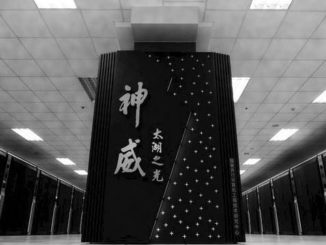
There is a lot of change coming down the pike in the high performance computing arena, but it has not happened as yet and that is reflected in the current Top 500 rankings of supercomputers in the world. …
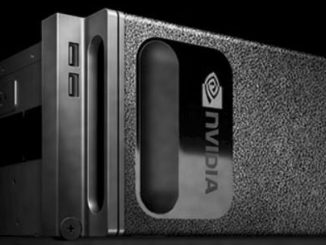
One of the reasons why Nvidia has been able to quadruple revenues for its Tesla accelerators in recent quarters is that it doesn’t just sell raw accelerators as well as PCI-Express cards, but has become a system vendor in its own right through its DGX-1 server line. …
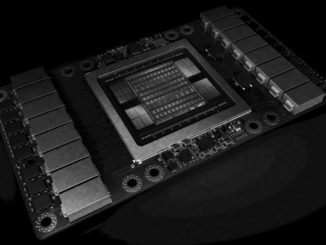
We are still chewing through all of the announcements and talk at the GPU Technology Conference that Nvidia hosted in its San Jose stomping grounds last week, and as such we are thinking about the much bigger role that graphics processors are playing in datacenter compute – a realm that has seen five decades of dominance by central processors of one form or another. …
Graphics chip maker Nvidia has taken more than a year and carefully and methodically transformed its GPUs into the compute engines for modern HPC, machine learning, and database workloads. …
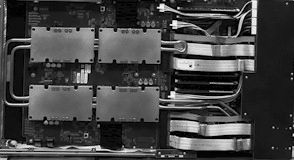
The Global Scientific Information and Computing Center at the Tokyo Institute of Technology has been at the forefront of accelerated computing, and well before GPUs came along and made acceleration not only cool but affordable and normal. …
All Content Copyright The Next Platform