Taking A Long View On HPC And Beyond
Bad things sometimes happen to good companies, but the great ones are resilient; they ride out the difficulties and keep forging ahead. …
Having access to fairly reliable 10-day forecasts is a luxury, but it comes with high computational costs for centers in the business of providing predictability. …
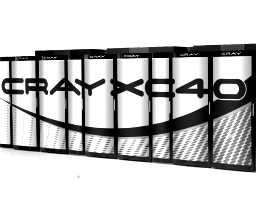
For those in enterprise circles who still conjure black and white images of hulking supercomputers when they hear the name “Cray,” it is worth noting that the long-standing company has done a rather successful job of shifting a critical side of its business to graph analytics and large-scale data processing. …
Supercomputer maker Cray might not roll out machines for deep learning anytime in 2016, but like other system vendors with deep roots in high performance computing, which leverages many of the same hardware elements (strong interconnect and GPU acceleration, among others), they are seeing how to loop their expertise into a future where machine learning rules. …
Not every organization that relies on supercomputers can replace a whole machine in one fell swoop. …
The bottlenecks never get removed from a system, they just shift around as you change one component or the other. …
While graph analytics is not a likely replacement for the standard relational databases that many companies will stick with for many years to come, the value of graphs for a particular set of knowledge discovery applications has become clearer with a widening set of use cases in areas ranging from security, fraud detection, medical research, financial services, and a number of other segments. …
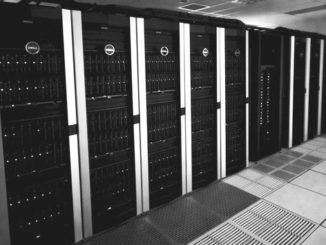
By definition, the national HPC labs are on the very bleeding edge of supercomputing technology, which is necessary given the scope and scale of the problems they are trying to solve through simulation and analysis and enabled by the largesse of their budgets. …
Without any new plain vanilla processors from Intel, IBM, Fujitsu, AMD, or the relative handful of ARM server chip makers, and with Nvidia launching its Tesla M4 and M40 accelerators aimed at hyperscalers and those looking for cheap single-precision flops ahead of SC15, the “Knights Landing” Xeon Phi chip was pretty much the star of the high performance conference as far as compute is concerned. …
Proprietary and quasi-proprietary interconnects are nothing new to the supercomputing space, and in fact, this is where they still live and thrive and evolve. …
All Content Copyright The Next Platform